
A healthy mind helps you live happier. In today’s fast-paced life, we focus on physical health but often neglect mental well-being. Discover why caring for your mind is just as important as taking care of your body — and simple ways to start today.
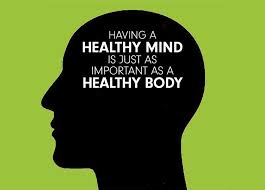
In today’s hectic life, we often forget to take care of our health. Now, when I mention health, most of you might instantly think about physical health—your eating habits, sleep schedule, or the need to exercise and stay active. But there’s another equally important part of us that needs attention and rest—our mind.
A healthy body may help you live longer, but a healthy mind enables you to live happier. Let us first understand what functions the mind performs.
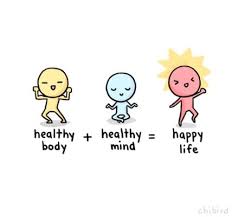
The human mind performs countless functions — many of which we’re aware of but rarely stop to categorize or reflect upon. Thinking, feeling, perceiving, imagining, remembering, and exercising willpower are all vital functions of the mind. It encompasses every mental process, from our conscious awareness — how we understand ourselves and the world around us — to unconscious influences that quietly shape our thoughts and actions.
Although the exact nature of the mind continues to inspire curiosity and debate, its significance in shaping human life is undeniable. Some perspectives highlight its deeply internal nature, suggesting that the mind cannot be directly observed by others but instead works within us, constantly interpreting and transforming information.
Let’s attempt to cover every function at the moment. Later, we will discuss each topic in separate blogs.
#Thinking is the mental process of using your mind to reason, make judgments, solve problems, and form ideas.
It involves manipulating information using mental representations, concepts, and language to process new information, recall memories, and make decisions. Thinking can also refer to the opinions or ideas a person has formed, or the act of considering something carefully.
*Mental manipulation: Thinking is the process of actively using your mind to process information, rather than just receiving it.
*Cognitive processes: Key components include reasoning, problem-solving, decision-making, and forming concepts.
*Mental representations: The mind uses internal representations like mental images or symbols to stand for things that are not physically present.
*Concepts and schemas: These are internal representations that organize knowledge about classes of things and their relationships, influencing how you think.
*Language: Language serves as a system of symbols to represent and communicate these thoughts, ideas, and concepts.
# Feelings: The mind has the capacity to understand feelings. The mind’s understanding of feelings extends beyond simply experiencing them; it involves a multi-step cognitive process that enables insight and informed responses.
Different forms of feeling include basic emotions like happiness, sadness, fear, anger, surprise, and disgust, which are thought to be universally experienced. These can be further broken down into a wider spectrum of emotions, such as anxiety, joy, shame, relief, and love, which can be combined and experienced in complex ways.
Basic emotions
*Happiness: A pleasant emotional state involving feelings of joy, contentment, and satisfaction.
*Sadness: An emotional state characterized by feelings of disappointment, grief, or hopelessness.
*Fear: A primal emotion associated with survival that triggers a fight or flight response.
*Anger: An emotional state that leads to feelings of frustration, hostility, and animosity.
*Surprise: A brief emotional state, either positive or negative, that occurs after something unexpected.
*Disgust: A strong emotion resulting from finding something repulsive or that causes revulsion.
Other forms of feeling
*Complex emotions: These are a combination of basic emotions, such as jealousy (anger + fear + sadness) or anticipation (a mix of surprise and joy).
*Social emotions: These are emotions that are unique to social interactions, such as admiration, awe, and empathy.
*Physical feelings: These are feelings related to the body, such as hunger, thirst, tiredness, or being cold.
*Abstract feelings: These are feelings that do not have a direct physical component, such as boredom, confusion, or inspiration.
#Perceiving is the act of understanding, realising, seeing, noticing, or becoming aware of.
A perceptive mind is good at noticing and understanding things that are not obvious, showing keen insight and intuition. They are insightful and can pick up on subtle cues in people and situations that others might miss, leading them to understand things on a deeper level.
*Insightful understanding: A perceptive person can understand situations and people’s emotions, even when they are trying to hide them.
*Observant: They are good at noticing details that others overlook, such as facial expressions, body language, or subtle patterns.
*Good at connecting information: They can connect different pieces of information to form a complete picture or make accurate deductions, as if they are reading between the lines.
*Makes accurate analysis: Their insights are often perceptive, accurate, and go beyond the superficial.
#Imagining is the process of forming a mental image or idea of something not present to the senses. It is the mental manipulation of objects and experiences to create a new, reconstructed reality in your mind. This faculty, also known as imagination, can be a voluntary, conscious process or an involuntary one, like in dreams or daydreams.
Imagination in a psychological context
*Mental imagery: Forming a mental image or concept of something not actually present.
Synonyms: Imagination, visualization, mental imagery.
Example: Athletes use visualization to picture themselves succeeding in a competition
# Remembering is the cognitive process of retrieving or recalling information from the past. It is not a simple, passive action but a complex neurological function influenced by attention, emotion, and context. Memory is the mental ability to store, retain, and recall past experiences, and remembering is the act of accessing that stored information.
Few tips to increase the power of remembering.
*Train your brain: Engage in mentally stimulating activities like learning a new skill, doing puzzles, or reading.
*Get enough sleep: Sleep is vital for memory consolidation, the process by which the brain stabilizes memories for long-term storage.
# Willpower is the ability to resist short-term temptations and control impulses to achieve long-term goals. While often associated with strong determination, psychologists define it more precisely as a form of self-regulation that allows you to override unwanted thoughts, feelings, or urges
Why willpower is important
Willpower is critical for success in many areas of life, not just for resisting bad habits. It has been linked to:
*Better mental and physical health
*Higher academic achievement
*Greater financial security
*Improved relationships
Reward yourself for progress: Celebrate small victories to stay motivated. Rewards reinforce positive behaviors and make the journey toward a goal more enjoyable. Just be sure the reward doesn’t conflict with your long-term objective.
Manage self-criticism and setbacks: Being overly harsh on yourself after a mistake can drain your willpower. Acknowledge setbacks, forgive yourself, and get back on track. This preserves your mental energy for the next challenge
In the race of modern life, it’s easy to forget that mental health is just as important as physical health. Your mind works tirelessly — thinking, creating, solving, and managing emotions. It deserves care, compassion, and rest.
So today, take a moment to pause. Breathe deeply. Reflect on how you truly feel.
Because real health isn’t just about the strength of your muscles — it’s about the peace within your mind.